
Long-term stewardship
Plan beyond a short transaction, with landscape, agriculture, infrastructure and community use considered together.
CommonGround is exploring aligned land relationships for one exceptional flagship destination in Ontario—bringing local food, agriculture, nature, craftsmanship, recreation and community together in one professionally managed place.
CommonGround is not seeking a collection of disconnected sites. The objective is one cohesive, year-round flagship where nature is the primary attraction and each improvement strengthens the guest experience, productive land use and long-term community value.
Plan beyond a short transaction, with landscape, agriculture, infrastructure and community use considered together.
Explore whether underused areas, active agriculture and compatible destination uses can support stronger year-round utility.
Apply disciplined planning, site management and layered decision-making rather than improvised or temporary development.
Consider benefits for nearby farms, businesses, residents, visitors and municipalities without promising specific economic outcomes.
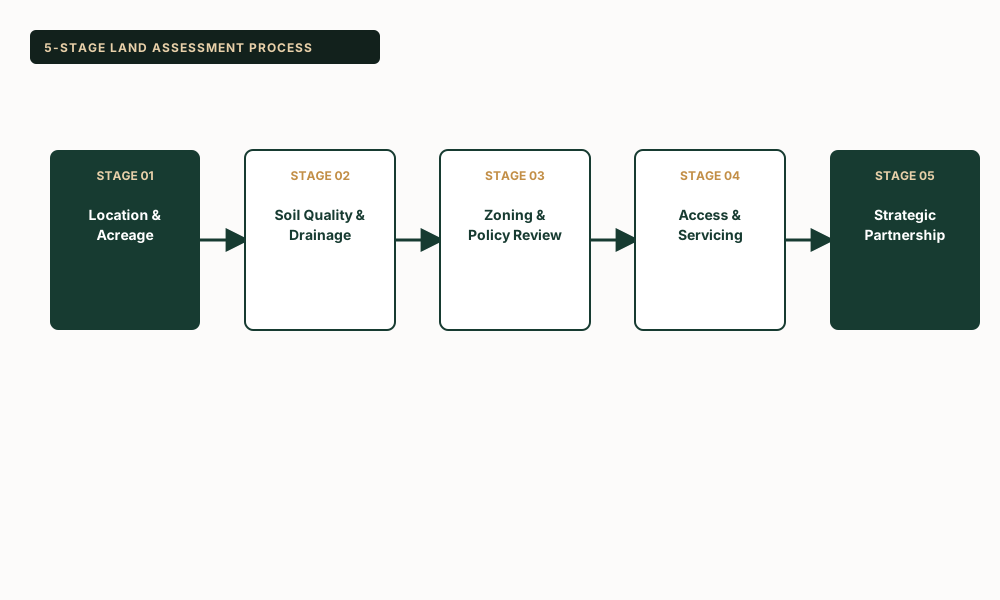
A systematic framework for evaluating potential land relationship opportunities.
CommonGround prefers to understand the landowner’s goals, the property’s realities and the potential operating relationship before treating acquisition as the default answer.
An aligned partnership may preserve owner involvement, keep agricultural land productive, support phased improvement and connect site decisions to long-term stewardship. The appropriate structure can only be determined through discussion and due diligence.
Any relationship would require a property-specific review and mutually approved legal documentation. CommonGround does not provide legal, tax or financial-return guarantees.
No single characteristic confirms suitability. CommonGround considers how location, access, land, planning and operating conditions work together.
Ontario municipality, major-road proximity, public-road frontage, safe access, surrounding uses and regional draw.
Usable acreage, agricultural capability, parking potential, existing buildings, trees, water, drainage and natural features.
Known zoning, policy context, hydro, water, wastewater options, environmental constraints and realistic phasing.
These general answers are informational and non-binding. Property-specific facts may change the discussion.
Submit property details for initial internal review.